
 Last updated February 1st 2026

What Brown Sugar Actually Does in Recipes
Brown sugar is made from white sugar combined with molasses. That molasses content is what gives brown sugar its color, mild caramel flavor, and functional properties in cooking and baking.
From a culinary standpoint, brown sugar contributes:
- Moisture retention, which helps baked goods stay soft
- A deeper, slightly caramelized flavor
- Enhanced browning during baking
- A softer crumb in cookies, cakes, and quick breads
Because of these properties, replacing brown sugar is not just about sweetness. A substitute can match the sweetness intensity but fails to replicate moisture, texture, or flavor.
When You Might Need a Brown Sugar Substitute
People look for brown sugar substitutes for different reasons. Understanding the reasons can help narrow the best option.
Common situations include:
- To bake without brown sugar
- To cook sauces or marinades that require mild sweetness
- To reduce added sugar intake
- To manage blood sugar response
- To improve digestive tolerance
- To adapt recipes based on ingredient availability
A substitute that works well in one situation could perform poorly in another.
Common Brown Sugar Substitutes & Their Trade-Offs
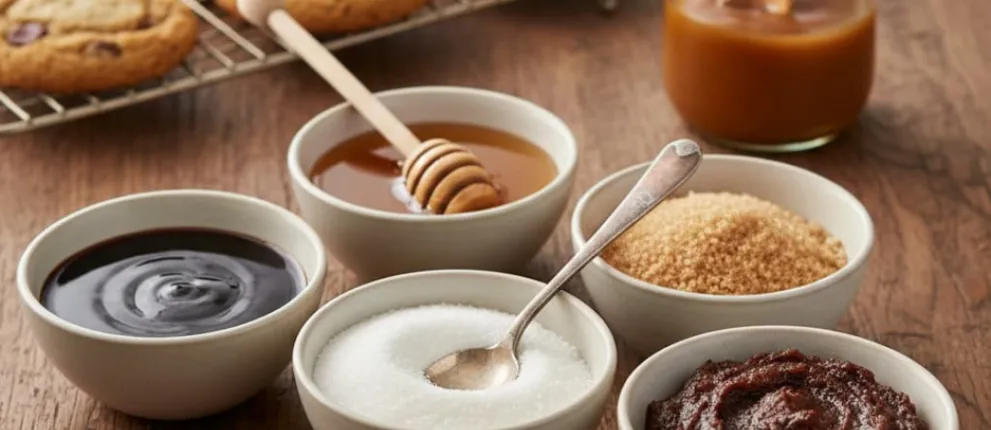
The table below compares common brown sugar substitutes based on how they behave during baking and cooking, along with nutrition and digestive health considerations.
| Substitute | Best Uses | What It Does Well | Key Limitations |
|---|---|---|---|
| White sugar + molasses | Baking, cookies, cakes | Closest match to brown sugar flavor, moisture retention, and browning | Requires molasses; flavor varies by molasses type |
| White sugar | Sauces, light cooking | Matches sweetness | Dry texture, less flavor depth |
| Honey | Sauces, marinades | Adds moisture and sweetness | Strong flavor, alters baking texture |
| Maple syrup | Glazes, quick breads | Mild flavor, liquid sweetness | Thins batters, needs adjustment |
| Coconut sugar | Baking specific products | Similar look, mild caramel notes | Less moisture, falls under low-glycemic index |
| Date sugar / paste | Dense bakes, energy-style recipes | Adds fiber, whole-food source | Does not dissolve well, strong flavor |
|
Molasses (alone) |
Flavor accent only |
Deep flavor |
Too intense alone, unbalanced |
|
Sugar alcohol / monk fruit blends |
Reduced-sugar needs |
Lower glycemic impact |
Can cause bloating, poor browning |
Each option has trade-offs. Choosing the right one depends on the way brown sugar functions in the specific recipe.
Baking vs Cooking: Why the Same Substitute Behaves Differently
In baking, sugar contributes to structure, moisture retention, and browning. While, in cooking, sugar mainly affects flavor balance and caramelization.
This is why substitutes that work well in sauces may fail in cookies or cakes. Liquid sweeteners change batter consistency, while dry substitutes may lack moisture.
Understanding this distinction helps prevent common substitution mistakes.
Blood Sugar Considerations
From a nutrition perspective, brown sugar substitutes are not inherently blood sugar neutral. What matters most is portion size, overall meal composition, and individual response.
Some key points:
- Coconut sugar still raises blood sugar
- Liquid sugars can lead to faster absorption
- Pairing sugar with protein or fat slows glucose response
Choosing a substitute should be about moderation and context, not labels.
Digestive Tolerance and Bloating
Digestive response varies widely among individuals.
Common issues include:
- Bloating from sugar alcohols
- Discomfort from high-fructose sweeteners
- Sensitivity to large amounts of fiber-based sugars
For people with sensitive digestion, simpler sugars in smaller amounts may be better tolerated than heavily processed alternatives. If bloating is a recurring issue, understanding the underlying cause is more helpful than switching sweeteners alone.
Related reading: How to Debloat Fast: Evidence-Based Relief When You Need It
Store-Bought Brown Sugar Alternatives
Store-bought brown sugar alternatives are designed to mimic the flavor and function of brown sugar while meeting specific dietary needs, such as reduced sugar intake or lower glycemic impact.
Below are commonly used options available on Amazon.
- Lakanto Golden Monk Fruit Sweetener - A monk fruit and erythritol blend designed to resemble brown sugar in color and sweetness. Often used in baking but may not brown or retain moisture like traditional brown sugar.
- Swerve Brown Sugar Replacement - A brown-sugar-style blend using erythritol and oligosaccharides. Performs reasonably well in some baked goods but may affect texture and digestive tolerance in sensitive individuals.
- Truvia Brown Sugar Blend - A blend of sugar and stevia intended to reduce total sugar content while preserving some brown sugar flavor. Still behaves partly like sugar but with altered sweetness intensity.
- Whole Earth Brown Sugar Blend - A mix of sugar and plant-based sweeteners designed for gradual sugar reduction rather than full substitution.
- Anthony’s Organic Coconut Sugar - A minimally processed sugar with a mild caramel flavor. Similar in appearance to brown sugar but lacks molasses-driven moisture and browning.
- Viva Doria Allulose Sweetener - A zero-calorie, low-carb sugar substitute suitable for keto and diabetic-friendly diets.
- Bengal Box Laxmi Jaggery Powder - A natural sweetener, made from 100% pure sugarcane.
Each product differs in ingredient composition, baking performance, and digestive tolerance. These differences matter when choosing a substitute for specific recipes.
How to Choose the Right Substitute
The table below provides a quick decision guide based on common situations.
|
Situation |
Best Option |
Why It Works |
|---|---|---|
|
Baking cookies or cakes |
White sugar + molasses |
Preserves moisture, flavor, and browning |
|
Cooking sauces or marinades |
Honey or maple syrup |
Dissolves easily, balances flavors |
|
Reducing blood sugar spikes |
Smaller portions, meal pairing |
Context matters more than sugar type |
|
Sensitive digestion |
Avoid sugar alcohols |
Reduces bloating and discomfort |
|
No brown sugar on hand |
White sugar (short-term) |
Acceptable sweetness, limited texture |
There is rarely a perfect swap, but there is usually a better option for the task.
Common Mistakes When Replacing Brown Sugar
- Substituting 1:1 without adjusting moisture
- Assuming natural sugars are low-glycemic
- Overusing molasses
- Using sugar alcohols in yeast baking
- Do not read the label/method to use
Final Takeaway
Brown sugar is more than a sweetener. It plays a structural and functional role in moisture, flavor, and browning. Successful substitution depends on understanding whether you are baking or cooking, the texture you need, and how different sweeteners behave under heat.
While white sugar plus molasses is the closest functional match in baking, liquid sweeteners and alternative sugars can work well in specific contexts when used thoughtfully. Ultimately, there is no universal replacement.
While considering blood sugar response and digestive tolerance, choosing the right substitute is about matching function and not just sweetness.
Related Recipes and Guides
- How to Soften Brown Sugar
- Date Sugar Recipe - a nutrient-rich substitute for refined sugars using just dates.
- Browning Sauce Recipe - caramelized brown sugar that adds that distinct dark brown color to certain Caribbean dishes
Brown Sugar Substitute Recipes:
About This Article
This article was written by Dr. Radhika Jain, Food Scientist and Dietitian, and reflects current evidence on baking behavior, blood sugar response, and digestive tolerance related to sugar substitutes.
Content is intended for general educational purposes and focuses on practical, real-world decision-making rather than rigid dietary rules.
Add new comment