
 Last updated May 1st 2026

Why Brown Sugar Gets Hard in the First Place
Brown sugar contains molasses, which naturally holds moisture. When that moisture escapes into the air, the sugar crystals bind together and harden.
This usually happens when brown sugar is stored in packaging that isn’t truly airtight or is opened frequently. Hardened brown sugar isn’t spoiled or unsafe to use—it’s simply dried out.
Quick Ways to Soften Brown Sugar (When You Need It Now)
These methods work best when you’re already baking and need usable brown sugar within minutes.
Microwave Method (Damp Paper Towel)
Place the amount of brown sugar you need into a microwave-safe bowl. Cover it with a damp (not dripping) paper towel and microwave in 20-second intervals. Break up the sugar with a fork between intervals until it softens.
This method is fast and effective for small amounts, but the sugar will harden again as it cools. Use it immediately, and avoid overheating, which can partially melt the sugar.
Oven Method
For larger quantities, spread the hardened sugar on an oven-safe baking dish and warm it in a 250°F oven for a few minutes. Check frequently and break up clumps as they soften.
Remove the sugar as soon as it’s workable and measure what you need right away. Like the microwave method, oven-softened sugar will re-harden once it cools.
Overnight and Longer-Term Methods (Best for Storage)
If you have time to plan ahead, these methods restore moisture more gently and help keep brown sugar soft longer.
Bread Method
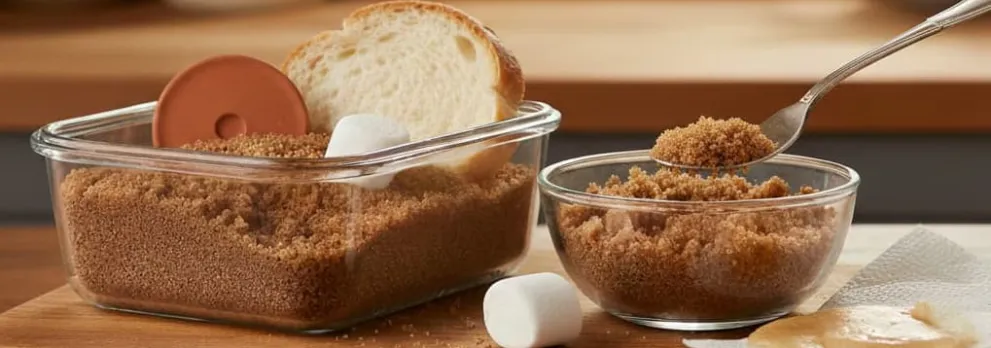
Place a slice of bread in an airtight container with the brown sugar and seal it overnight. The sugar absorbs moisture from the bread and softens, while the bread becomes stale.
Remove and replace the bread once the sugar has softened to prevent mold.
Marshmallow Method
Adding one or two marshmallows to an airtight container of brown sugar works similarly to bread, but with less risk of flavor transfer. Marshmallows slowly release moisture and are a popular low-effort option.
Apple Slice Method
A few apple slices can also soften brown sugar, but this method may subtly affect flavor. It’s best used only if the sugar will be used soon rather than stored long-term.
Terracotta Disk or Brown Sugar Keeper
Soak a terracotta disk in water, pat it dry, and place it in the container with your brown sugar. This is my personal favorite, and it's one of the most reliable long-term solutions that helps maintain moisture without affecting flavor.
What Not to Do
- Don’t pour liquid directly onto brown sugar, it creates uneven moisture and clumping.
- Don’t microwave sugar for long stretches without checking, it can overheat quickly.
- Don’t leave moisture sources like bread or fruit in the container longer than needed.
How to Choose the Right Method
| Situation | Best Option | Speed | Effectiveness |
|---|---|---|---|
| You need brown sugar immediately | Microwave with damp paper towel | Very fast (30–60 seconds) | High, but temporary |
| You need a large amount softened quickly | Oven method (250°F) | Fast (5–10 minutes) | High, but temporary |
| You want sugar to stay soft long-term | Bread or marshmallow method | Slow (overnight) | High and longer-lasting |
| You bake often and want prevention | Terracotta disk or airtight container | Ongoing | Very high |
| Sugar is extremely hard and clumped | Microwave or oven, then break apart | Fast | High with manual effort |
The best method depends on how quickly you need the sugar and how you plan to use it.
How to Store Brown Sugar So It Stays Soft
The most effective way to prevent hardened brown sugar is proper storage. Transfer brown sugar to a truly airtight container as soon as you open it. Resealable bags and original packaging often allow air to sneak in over time.
Using a moisture-retaining option, such as a terracotta disk or marshmallows, helps keep sugar soft even with regular use.
Final Thoughts
Hardened brown sugar is a nuisance, but it’s an easy fix once you know what works. Whether you need a quick solution mid-recipe or a reliable way to keep sugar soft for months, the right method comes down to timing and storage habits.
With a few simple adjustments, you can stop fighting clumps of brown sugar and get back to baking without the frustration.
Related Reading: Brown Sugar Substitutes
Add new comment