
 Last updated February 21st 2026

Where Recipe Ideas Come From
Our recipe ideas come from multiple sources: reader feedback, seasonal ingredients, Caribbean culinary traditions, search trends, and internal research. We use data tools to understand what people are actively searching for, but we also rely heavily on lived experience and cultural knowledge.
Many recipes begin with simple, practical questions:
- Can this dish be made healthier without losing its character?
- Can it be simplified for a home kitchen?
- Can we clarify common cooking mistakes?
Some ideas come directly from our community. Comments, emails, and social discussions often highlight gaps that we turn into new recipes or improvements to existing ones.
Writing the First Version
Once an idea is approved, a recipe developer drafts the initial version. We only work with recipe developers who have significant hands-on cooking experience or formal culinary training.
This stage includes:
- Ingredient selection and testing ratios
- Clear step-by-step instructions
- Practical cooking tips
- Storage and leftover guidance
- Dietary applicability notes
Our recipe developers draw from formal training, professional kitchen experience, and traditional home cooking methods. The goal is not just to create something that tastes good, but something that works consistently in a home kitchen.
Kitchen Validation
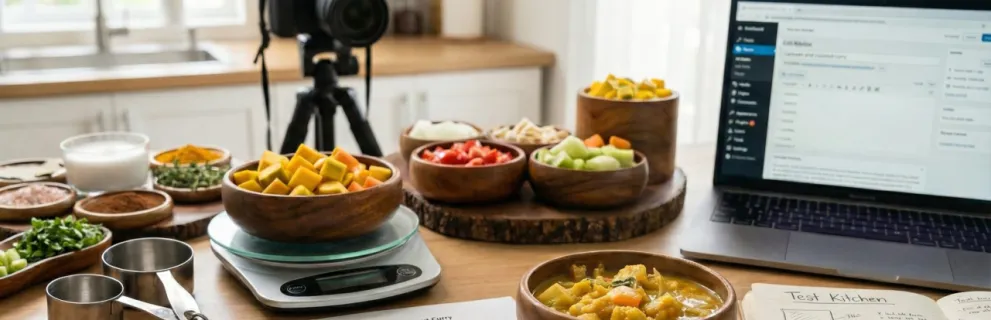
Before publication, recipes are tested in our internal test kitchens. We work with dedicated testers across different locations to recreate the recipe exactly as written.
This step verifies:
- Accuracy of measurements
- Cooking times and temperatures
- Texture and flavor balance
- Ingredient substitutions
- Ease of execution for home cooks
If something does not work as expected, the recipe goes back for revision. Sometimes adjustments are minor. Other times, we rework entire sections for clarity or reliability.
We do not publish recipes that have not been physically prepared and evaluated.
AI may assist with formatting and workflow tasks, but it does not generate untested recipes for publication.
Peer Review and Editorial Checks
After testing, another recipe developer reviews the recipe with fresh eyes. This review focuses on clarity, logical flow, and reader usability.
We check for:
- Ambiguous instructions
- Missing preparation steps
- Unclear ingredient descriptions
- Inconsistent units
At this stage, we also confirm that dietary labels (such as gluten-free, vegetarian, or diabetic-friendly) are applied correctly based on the actual ingredients used.
Nutritional and Medical Review
A Registered Dietitian or qualified nutrition professional reviews each recipe before publication. The reviewer’s name is listed on the recipe page when applicable, typically near the top under “Nutritionally Reviewed by.”
Some recipes are also reviewed by medical or nutrition consultants when deeper dietary guidance is provided. In those cases, you will see “Medically reviewed by” clearly displayed near the top of the page.
We use AI tools to assist with structured formatting, data organization, and internal workflows. However, AI does not replace recipe testing, human writing, or professional review. Every recipe is created, tested, and approved by real contributors before publication.
Photography and Visual Content
All recipe photos on Classic Bakes are based on real food prepared from our tested recipes. Images are captured in real kitchen environments and reflect the actual outcome of the recipe as written.
We do not use AI-generated food images for our recipes.
In some rare cases, we may use licensed stock images for supporting visuals.
Video content follows the same standard. Recipe videos are based on tested recipes and filmed using real ingredients and real preparation methods in real kitchens.
Publishing and Ongoing Updates
Once approved, the recipe is formatted for the website. This includes:
- Structured data for search engines
- Performance optimization
- Accessibility checks
- Internal linking for related recipes
After publishing, we continue monitoring reader feedback, performance metrics, and updated dietary guidelines. If new information becomes available, recipes are revised and the update date is reflected on the page.
The Team Behind Classic Bakes
Creating a reliable recipe involves more than one person. Our workflow includes:
- Recipe developers
- Test kitchen contributors
- Peer reviewers
- Nutrition reviewers
- SEO analysts
- Technical developers
- Content editors
- Social media managers
We operate using structured project management systems to track revisions, testing rounds, and publication stages. This ensures accountability and consistency across hundreds of recipes.
You can view our Team Members page, which is updated periodically.
Why This Process Matters
Food content is easy to publish. Reliable food content requires structure.
Our process is designed to ensure that when you follow a Classic Bakes recipe, it works as written. Measurements are accurate. Instructions are clear. Dietary labels are applied carefully. Nutritional insights are reviewed.
Trust is earned through transparency and consistency. That is why we continue refining our workflow as Classic Bakes grows.
When you cook from Classic Bakes, you are using a recipe that has been researched, tested, reviewed, and improved.
And we will keep improving it.