
 Last updated January 2nd 2026

Quick Summary: Brown Rice vs White Rice
If you’re deciding between brown rice and white rice, neither is inherently “good” nor “bad.” Brown rice provides more fiber and certain minerals, while white rice is easier to digest, quicker to cook, and often better tolerated by a sensitive stomach. The best choice depends on how often you eat rice, how your body responds to fiber, and how rice fits into your daily cooking routine (Healthline, 2024).
What Is the Difference Between White Rice & Brown Rice?
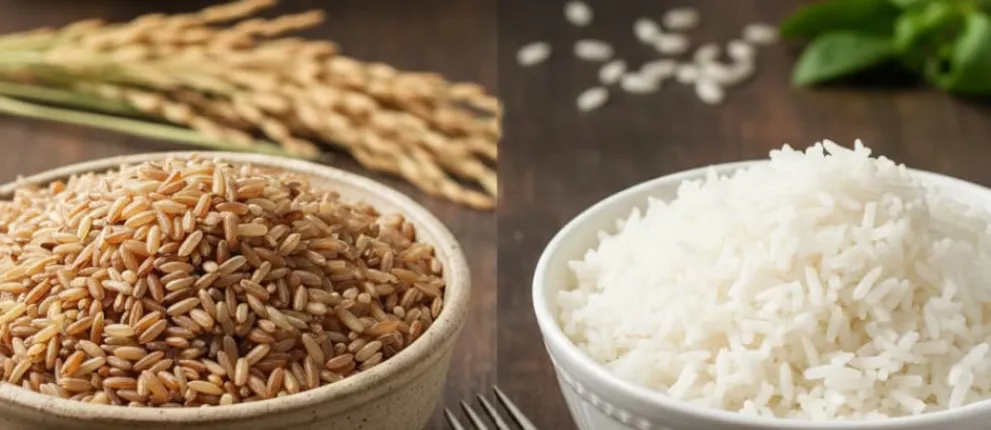
Brown rice is an untreated whole grain, composed of bran, germ, and endosperm, which are the natural layers of the rice grain. White rice is made by removing the bran and germ, leaving only the starchy endosperm (Brown Rice as Useful Nutritional Source - Zahra and Jabeen. 2020).
This processing changes the texture, flavor, shelf life, and nutrient profile of the rice. Brown rice has a firm texture and nuttier taste, while white rice cooks faster and has a softer, more neutral flavor.
Nutritional Differences: What Changes & What Doesn’t
Brown rice contains more fiber, magnesium, and certain B vitamins because the bran and germ are intact. After processing, white rice has lower fiber but is often enriched with iron and B vitamins.
While brown rice has many nutritional merits, the difference is smaller than many people expect. For individuals who eat a varied diet that includes vegetables, legumes, and proteins, rice is rarely the main source of fiber or micronutrients. Rice is typically paired with other foods, which influences overall nutrition more than the choice between white and brown rice alone (Harvard Health Publishing - Klein & Writer, 2024) (Healthline, 2018).
Digestion & Glycemic Response
Brown rice digests more slowly because of its fiber content. This can lead to a slower rise in blood glucose after meals. Most varieties of white rice digest quickly, which may cause a sudden increase in blood sugar.
However, slower digestion is not always better for everyone. Some people experience bloating or discomfort when eating high-fiber grains. For those with sensitive digestion, white rice may be easier to tolerate (Klein & Writer, 2024).
The overall meal matters as well. Eating rice with protein, fat, or vegetables slows digestion regardless of the rice type.
Arsenic in Rice: What You Need to Know
Arsenic is a naturally occurring element found in soil and water. Long-term exposure to high levels can be harmful, which is why dietary sources of arsenic are often discussed.
Rice naturally absorbs arsenic from soil and water. Brown rice often contains higher levels because arsenic accumulates in the outer layers of the grain (Healthline, 2025) (MSU Research, 2025).
This does not mean rice should be avoided, but it does highlight the importance of moderation and preparation methods. Washing rice thoroughly and cooking it in excess water that is later drained off can significantly reduce arsenic levels.
Varying grains in the diet and avoiding reliance on rice as a single daily staple further reduces long-term exposure.
Taste, Texture & Cultural Eating Patterns
White rice is a staple in many cultures with long histories of good health outcomes, including the Caribbean, Asian, and Mediterranean cuisines. Texture and taste play a major role. Brown rice’s firm texture works well in some dishes, while white rice is preferred in others. Food that is enjoyed, is more likely to be eaten regularly and paired with nutritious meals.
Practical Factors for Home Use
Brown rice takes longer to cook and has a shorter shelf life due to its natural oils. White rice cooks faster, stores longer, and is often more affordable.
For busy households or batch cooking, these factors matter. The best rice choice is often the one that fits easily into daily routines.
Which Is Easier to Digest?
White rice is generally easier to digest due to its lower fiber content. Brown rice may feel heavier for people with digestive conditions or during recovery from illness. The reasons why brown rice may feel harder to digest:
- Higher fiber content: Brown rice contains the bran layer, which adds insoluble fiber. This slows digestion and increases gut activity.
- Phytic acid & intact grain structure: These can slightly reduce mineral absorption and make digestion slower compared to white rice.
- Chewing & cooking: If undercooked or not chewed well, brown rice can feel more “dense” in the stomach.
When brown rice may feel uncomfortable (even in otherwise healthy people)
- Large portions in one meal
- Sudden increase in fiber intake
- Eating it dry, undercooked, or without accompaniments
- During periods of stress, travel, or low hydration
Digestive tolerance varies widely. Paying attention to how your body responds is more helpful than following rigid rules.
Brown Rice vs White Rice: How to Choose
There is no universally better option. Consider choosing based on:
- Digestive comfort
- Frequency of rice consumption
- Cooking time and storage needs
- Cultural and personal preferences
Below is a simple comparison to help you decide which option may suit you better in different situations.
| Consideration | Brown Rice | White Rice |
|---|---|---|
| Digestive comfort | Higher fiber may feel heavy for some people | Generally easier to digest and gentle on the stomach |
| Frequency of rice consumption | Works well when eaten occasionally or as part of a varied grain intake | Often better suited for frequent or daily rice meals |
| Cooking time | Takes longer to cook | Cooks quickly and is convenient for busy days |
| Storage and shelf life | Shorter shelf life due to natural oils | Stores well for long periods |
| Cultural and taste preferences | Nutty flavor and firmer texture | Neutral flavor and soft texture that pairs easily with many dishes |
This comparison is not about choosing one permanently. Many people alter between both types depending on the meal and their needs.
Many people benefit from including both types of rice in their diets.
Final Takeaway
The choice between brown rice and white rice does not need to be absolute. Both can support a balanced, enjoyable diet when prepared thoughtfully and eaten in moderation.
What matters most is consistency, variety, and choosing foods that work well for your body and lifestyle.
References
Rice Recipes
- Brown Rice Instant Pot (brown rice)
- Moro Rice (white rice)
- Baked Rice (white rice)
- Bahamas Peas and Rice (white rice)
- Instant Pot Cilantro Lime Rice (white rice)
- All Classic Bakes rice dishes
Add new comment