
 Last updated May 27th 2026

Deconstructing myths and diseases
When headlines announce that a food product is being banned across multiple regions, consumer anxiety naturally rises. It is common to wonder if regulatory bodies have discovered hidden health risks or dangerous side effects. However, a neutral look at the legislation reveals that these state and international bans are not a response to medical breakouts, toxicity, or "everyday diseases."
The driving force behind these bans is mostly economic and cultural. Legislative measures in major livestock-producing states, such as Florida and Texas, are designed to protect traditional agricultural economies, cattle farming sectors, and rural heritage from market competition.
At the federal level, the regulatory stance is entirely different. The US Food and Drug Administration (FDA) and the Food Safety and Inspection Service of the USDA have officially deemed cell-cultivated chicken safe for human consumption, granting commercial approvals to select producers after thorough safety consultations. The conflict is a legal and political culture war between federal safety approvals and local economic protections.
Structural Limits: How Does It Behave in a Recipe?
For anyone interested in the culinary arts, the primary question regarding alternative proteins is simple: how does it handle heat?
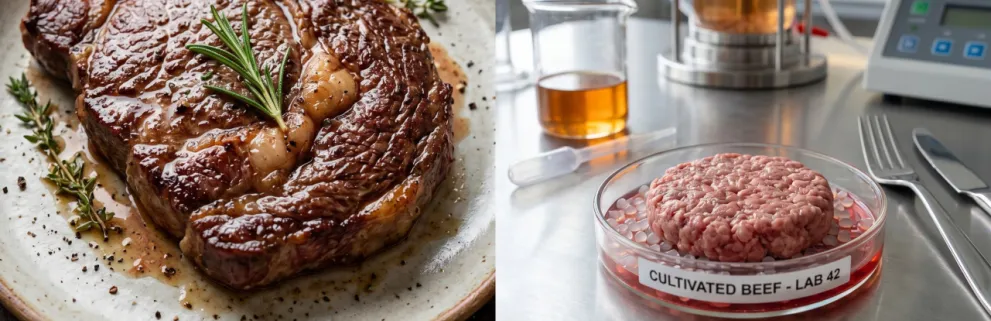
Traditional meat is a highly complex structure composed of interwoven muscle fibers, connective tissues, blood vessels, and intramuscular fat. Cultivated meat, by contrast, is grown by replicating isolated animal cells inside a bioreactor. Because these cells grow without a natural circulatory system or structured movement, replicating the intricate texture of a whole-cut steak or a bone-in chicken breast remains an immense technological hurdle.
Currently, cell-cultivated meat is structurally limited to unstructured, ground formats, such as nuggets, sliders, or sausage blends. For home cooks and food bloggers, this means the meat cannot simply be swapped into every traditional family recipe. Without natural collagen and complex tissue structures, the moisture release, rendering of fat, and binding capabilities change completely during cooking.
While the isolated muscle cells can undergo the Maillard reaction — the chemical reaction that causes browning and savory flavors when protein is on heat — the lack of natural fat distribution means achieving the ideal sear or juicy mouthfeel requires careful modifications.
The Ingredient Reality: Current Situation
To understand what consumers should look out for, it helps to separate the growth process from the final grocery product. Inside the bioreactor, animal cells are nourished by a liquid culture medium consisting of fundamental biological inputs: amino acids, vitamins, minerals, and glucose. While these inputs are clean and heavily monitored to ensure sterile conditions without relying on routine internal antibiotics, the raw cells harvested at the end of the cycle are essentially a soft, unstructured slurry.
To transform this cellular harvest into a recognizable form that can be cooked in a kitchen, manufacturers must introduce structural additives. This is where health-conscious cooks need to look closely at the ingredient labels. Plant-based binders, texturizers, and stabilizers (such as vegetable gums, starches, or soy proteins) are mixed with the animal cells to mimic the bite and chew of conventional meat.
Additionally, because cultivated muscle tissue lacks natural animal fat, flavor enhancers and sodium are frequently added to replicate a traditional savory profile. Consequently, the final retail product behaves nutritionally and structurally much more like an ultra-processed food than a single-ingredient whole food.
Official Dietary Classifications
When evaluating cell-cultivated meat against specific dietary boundaries, it is essential to look strictly at the source material rather than the production environment. Because this product is synthesized entirely from real animal stem cells, it carries clear biological distinctions that dictate diet eligibility:
- Vegan and Vegetarian: This meat is absolutely not compatible with vegan or vegetarian diets. Although it does not require traditional animal slaughter, it consists entirely of genuine animal tissue derived from living organisms.
- Allergen Awareness: Because the cellular and protein structures are identical to conventional meat, cultivated proteins carry the exact same allergen profile. An individual with a specific biological allergy to poultry, beef, or finfish will experience the identical allergic response when consuming cell-cultivated versions of those proteins.
- Paleo and Whole30: Due to the reliance on industrial bioreactors, texturizers, plant-based binders, and isolated additives required to shape the product, cell-cultivated meat does not align with dietary frameworks that prioritize unrefined, whole foods.
The Future of the Digital Kitchen
As food trends continue to evolve online, the future of cell-cultivated meat remains caught between regulatory gridlock and economic challenges. While federal agencies have established clear frameworks for safety, facility sanitation, and continuous inspection, local state prohibitions mean a uniform rollout across North American supermarkets is unlikely anytime soon. For food bloggers and home cooks, the immediate focus will remain on tracking ingredient transparency, monitoring retail cost parity, and discovering whether cellular agriculture can ever truly replicate the complex culinary performance of traditional whole cuts.
This article was written by Dr. Radhika Jain, food scientist and dietitian, and is intended to provide evidence-based guidance on the scientific, culinary, and regulatory realities of cell-cultivated meat. It covers manufacturing principles, kitchen functionality, and dietary classifications to help consumers and home cooks make informed choices about emerging food products.
This content is for educational purposes only and does not replace medical advice. Individual needs may vary based on health status, allergen sensitivities, and dietary requirements.
Add new comment