
 Last updated December 30th 2024

What is Couscous?
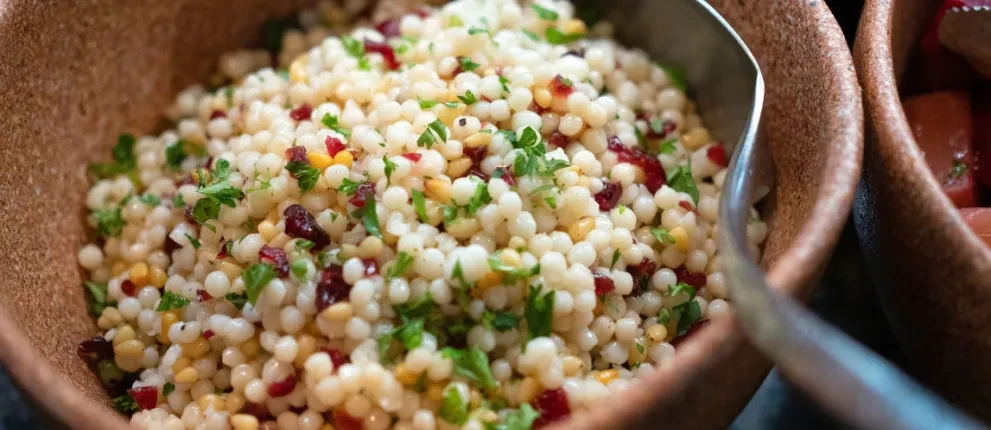
Couscous is a tiny pasta made from semolina wheat and water, traditionally steamed to a fluffy consistency. It is widely used in North African countries like Morocco, Algeria, and Tunisia and has become popular in Mediterranean and Western cuisines. There are several types of couscous, including Moroccan (fine grains), Israeli (pearl-like grains), and Lebanese (larger grains), each offering unique textures and flavors.
Is Couscous Healthy?
Couscous offers several health benefits, making it a valuable addition to a balanced diet. It is rich in selenium, an essential mineral that acts as a powerful antioxidant, helping the body repair damaged cells, reduce inflammation, and support thyroid health. Selenium is also associated with a lower risk of heart disease and certain types of cancer due to its ability to mitigate oxidative stress. A single cup of couscous provides over 60% of the recommended daily intake of selenium.
Additionally, couscous is a good source of plant-based protein, delivering about 6 grams per cup. While it is not a complete protein, it can be combined with other plant-based foods to meet dietary needs, especially for vegetarians. The protein content and selenium in couscous also support immune health by reducing oxidative stress and enhancing the body’s ability to fight infections.
However, couscous may not be suitable for everyone. It is made from semolina flour, a byproduct of durum wheat, and contains gluten. This makes it unsuitable for individuals with celiac disease or non-celiac gluten sensitivity. Furthermore, couscous is relatively high in carbohydrates and may not be ideal for people managing blood sugar levels or diabetes unless paired with foods high in protein or soluble fiber to moderate its glycemic impacts.
Source: Healthline | Is Couscous Healthy? Top 5 Health and Nutrition Benefits
How to Cook Couscous?
Cooking couscous is incredibly simple:
- Boil water or broth (1.5 times the amount of couscous).
- Add couscous, cover, and remove from heat.
- Let it sit for 5 minutes, then fluff with a fork.
For Israeli couscous, cook it like pasta by boiling for 8-10 minutes.
See our recipe How to Cook Couscous, which includes both the Moroccan and Israeli styles.
What is Couscous Made Of?
Couscous is traditionally made from semolina flour, which is coarsely ground durum wheat mixed with water. It is rolled into small grains and dried. Today, you can find whole wheat, gluten-free, and flavored couscous options for a variety of dietary needs.
Couscous Nutrition
Couscous is a nutrient-rich food offering a variety of essential vitamins and minerals. In one cup of cooked couscous, you'll find approximately:
- Calories: 176 kcal
- Protein: 5.95 g, contributing to muscle repair and growth.
- Carbohydrates: 36.46 g, providing a significant energy source.
- Dietary Fiber: 2.2 g, supporting digestive health.
- Fat: Minimal at 0.25 g, making it a low-fat option.
Couscous is also a good source of selenium (43.18 mcg), an antioxidant supporting immune function and thyroid health. It contains small amounts of minerals like iron, magnesium, and potassium, contributing to overall wellness. The absence of cholesterol and very low sodium levels make it a heart-friendly choice.
How to Cook Couscous in a Rice Cooker or Microwave
Rice Cooker:
Add couscous, water (1:1 ratio), and a pinch of salt. Cook on the white rice setting for perfect fluffiness.
Microwave:
Combine couscous, boiling water, and salt in a microwave-safe bowl. Cover and microwave for 3-5 minutes, then fluff with a fork.
Is Couscous Pasta or Grain?
Couscous is classified as pasta because it’s made from wheat, not a grain like rice or quinoa. Its small size and light texture, however, make it a unique addition to the pasta family.
How to Season Couscous
Seasoning couscous transforms it from plain to flavorful:
- Add olive oil or butter for richness.
- Season with spices like cumin, paprika, or turmeric.
- Finish with lemon juice, fresh herbs, or nuts for added texture and zest.
What to Eat with Couscous
Couscous pairs well with:
Is Couscous Gluten-Free?
Traditional couscous contains gluten because it’s made from wheat. For those with gluten sensitivities or celiac disease, gluten-free options made from corn, quinoa, or rice are available.
Add new comment